|
RECENT THREATS TO ACADEMIC FREEDOM IN FLORIDA
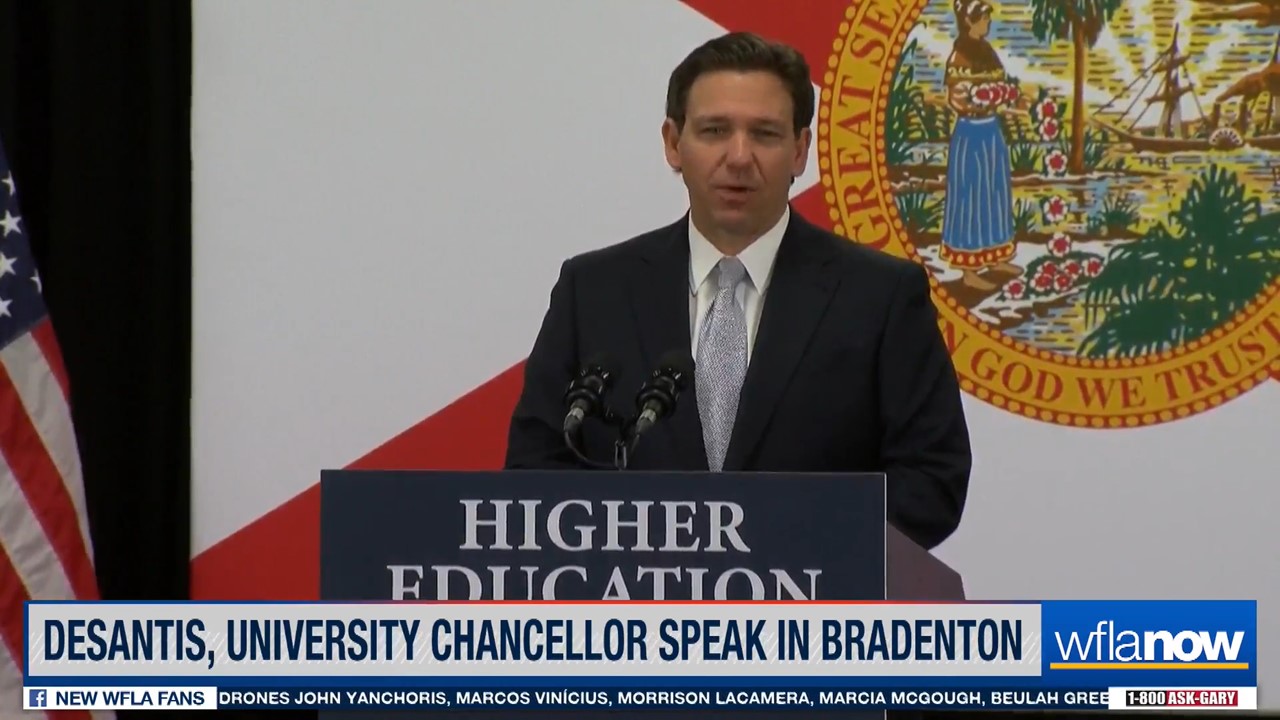
DeSantis Plans to Ban ‘Indoctrination’ at Florida Colleges and Universities. As reported by WFLA News Channel 8 (pictured above), "Gov. Ron DeSantis and State University System of Florida Chancellor Ray Rodrigues spoke at the State College of Florida, Manatee-Sarasota in Bradenton on January 31. The event was centered on 'bringing accountability to the higher education system' in Florida." DeSantis spoke about what he believed the purpose of higher education to be (to promote academic excellence and not 'ideological conformity'). He also spoke about what he believed was harming higher education (among other things, 'DEI bureaucracies' and the U.S. student loan system). "He said after his inauguration after reelection, the state had requested how much state colleges were spending on DEI programs, staff, and activities, and that 'it was a lot of money. Not the best use of your money' and promising to 'do something about that' at the day’s event." "An event briefing pamphlet handed to media read 'Education not Indoctrination' and set out a series of requirements that the state will be pursuing as an effort to reform its educational system... Additionally, the explanatory document said the reform had a goal of empowering boards of trustees at universities to do a post-tenure review at any time, allow presidents to make hiring decisions by 'reestablishing their authority over' the process, and amend research standards to require 'annual research expenditures of $50 million for STEM related programs, businesses or industry partners that will employ Floridians... DeSantis’ mention of the five-year tenure review was a callback to legislation passed in 2022 to no longer allow unlimited tenure without review. The governor said the change of hiring practices for Florida universities would also allow the state to prevent 'certain worldviews' from being promoted when making academic hiring decisions by faculty committees." The Real Reason Florida Wants to Ban AP African-American Studies, According to an Architect of the Course. According to an article published by TIME on February 1, "Florida is threatening to ban the new AP African American Studies class over topics that are optional—and aren’t even part of the curriculum, according to one of the lead architects of the course and a review of the official framework... The move comes after the Florida Department of Education informed the College Board in January that it would not approve the curriculum unless certain changes are made. Among the course materials it objected to are references to Black Lives Matter and reparations... Elaborating on the decision in a Jan. 23 press conference, Florida Governor Ron DeSantis, a former history teacher and college history major, says, 'We want education not indoctrination,' arguing that the class is 'pushing an agenda on our kids.'" Responses from the Higher Education Community in Florida. Faculty, staff, and students in Florida—particularly within the public sector—have endured a difficult few years. Here are just a few recent news and opinion items that share some of their perspectives:
ADDITIONAL POLICY NEWS ITEMS ON ACADEMIC FREEDOM & CAMPUS SPEECH
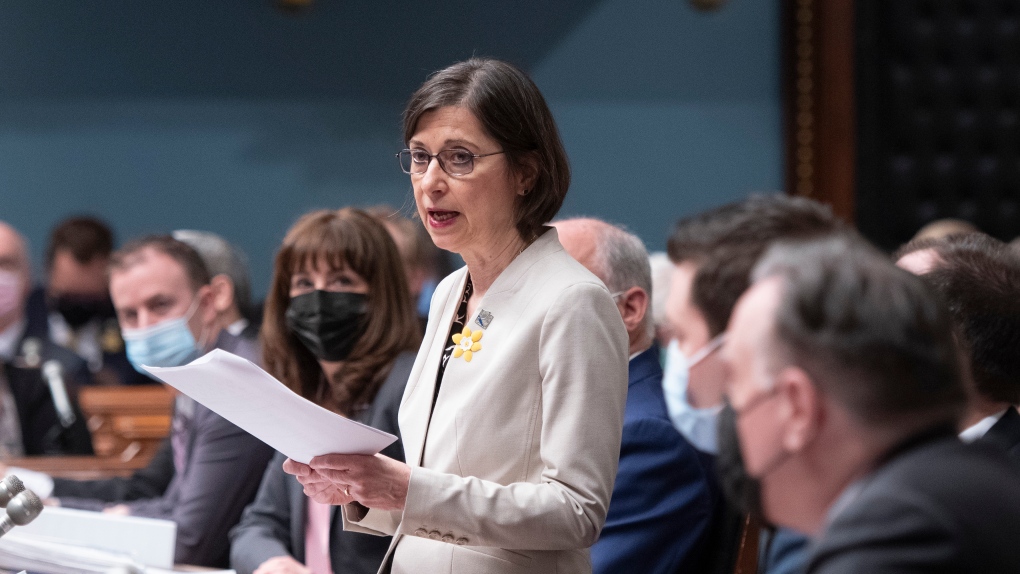
Quebec Passes Controversial Bill to Protect [emphasis added] Academic Freedom. A June 3 article for CTV News Montreal reports that elected officials in Quebec passed Bill 32, which "defines the right to university academic freedom as the right of every person to engage freely and without doctrinal, ideological or moral constraint in an activity through which the person contributes, in their field of activity, to carrying out the mission of such an educational institution." The article goes on to say: "Bill 32 gives the minister of higher education the right to make 'necessary corrections' in educational institutions deemed non-compliant. The bill has come under fire by students groups and professors alike, who argue it would allow professors to freely use racial slurs in the classroom. The Concordia University Black Student Union referred to it as a 'slap in the face' that any word can be uttered in a classroom, as long as it's used in an academic context. Some 130 professors signed an open letter to the government in the spring, questioning whether the goal of the bill was to protect academic freedom or to 'usher in an entirely new bureaucracy for state surveillance of classroom activities.'" Pictured above: Quebec Minister of Higher Education Danielle McCann. THE CANADIAN PRESS/Jacques Boissinot. At the Federal Level in the U.S.: The Plan to Dismantle DEI. According to an article published this week in The Chronicle of Higher Education, "Model state legislation, written by scholars at the Manhattan and Goldwater Institutes, if passed, would prohibit colleges from hiring diversity, equity, and inclusion officers; bar trainings that instruct staff to identify and fight against systemic racism; eliminate requirements for employees to commit to diversity statements; and could disallow even institutional commitments to social justice and recommendations that students be addressed by their preferred pronouns." As noted in the article, "Over the past two years, state lawmakers in 15 Republican-controlled states have passed 19 bills that seek to restrict teaching on issues of race, racism, and gender, according to figures from PEN America [a nonprofit promoting free expression]. Laws in seven states specifically address instruction on those topics at public colleges." Its January. Here Come the Bad Higher Education Bills. In a January 1 article for Forbes, Senior Contributor and former university president Michael T. Nietzel describes a slew of badly conceptualized bills (ranging from the silly to downright harmful) that are currently percolating at the state level. For example, "Last February, [Texas Governor Dan] Patrick announced his intent to end tenure in public universities and curtail the teaching of critical race theory." Also in Texas: "State Rep. Carl Tepper recently introduced a bill that would ban public colleges from funding campus offices of diversity, equity and inclusion. It also provides that individuals who are not even associated with an institution can sue over potential violations of the legislation." Nietzel notes that in South Carolina and Alabama, legislators will try again this year to pass bills banning Critical Race Theory (both bills failed last year). "In Oklahoma, Senator Nathan Dahm has taken the early lead for introducing the most trivial legislation. His SB 2 would require school districts, public charter schools, virtual charter schools, career and technology schools, and institutions of higher education to disseminate historic proclamations regarding the Thanksgiving holiday." At Berkeley Law, a Debate Over Zionism, Free Speech and Campus Ideals. A December 21 article in The New York Times explains that the Berkeley chapter of Law Students for Justice in Palestine and eight other student groups created a bylaw banning supporters of Zionism from speaking at group events. "A student group has the right to choose the speakers they invite on the basis of viewpoint,' said [law school dean] Mr. Chemerinsky, who is Jewish and a Zionist. 'Jewish law students don’t have to invite a Holocaust denier. Black students don’t have to invite white supremacists. If the women’s law association is putting out a program on abortion rights, they can invite only those who believe in abortion rights.' Mr. Chemerinsky said that excluding speakers based on race, religion, sex or sexual orientation would not be allowed, but he noted that the student groups were excluding speakers based on viewpoint. True, he said, many Jews view Zionism as integral to their identity, but such deep passions do not change the law. Other legal experts noted that the controversy showed just how mangled the understanding of the First Amendment had become, even at a place like Berkeley, the epicenter of the 1960s free-speech movement. The debate, they said, should focus on whether these bans align with the academic ideal of open, intellectual debate. Even if student groups can prohibit speakers, should they? And should such bans be codified—formally adopted with a bylaw?" For LGBTQ Teachers, Academic Freedom Means the Freedom to Exist. As professors Karen Graves and Margaret A. Nash write in an October 24 Washington Post opinion piece, states around the country—including Virginia and Ohio—have introduced or passed "laws that censure references to LGBTQ people or issues in the classroom," based on Florida's model. According to the writers, "These discriminatory attempts to marginalize the LGBTQ community reveal how attacks on public education and academic freedom are not just about what gets taught but who has the right to teach—and exist—in the nation’s schools. Indeed, as LGBTQ teachers have long understood, academic freedom is about more than just preserving space for divisive ideas to be explored—it’s also about preserving the right of people to exist." RESOURCES FROM SPSSI, APA, AND OTHER ORGANIZATIONS
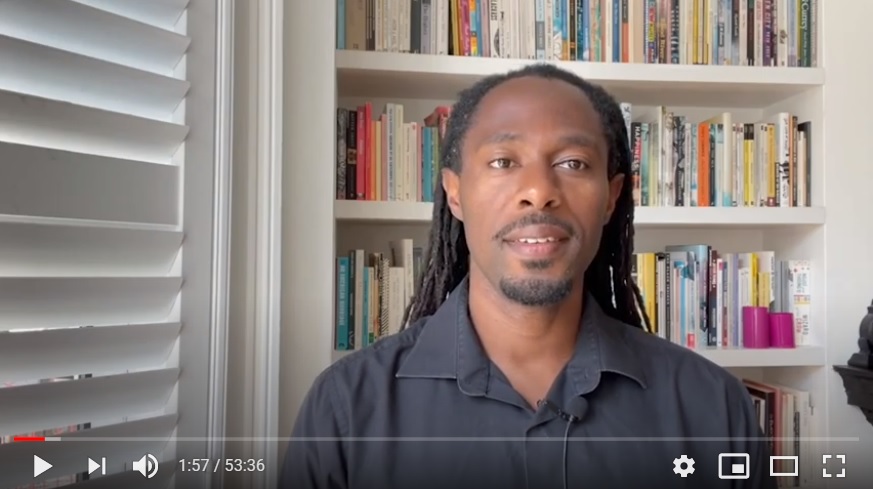
2021 SPSSI Presidential Address by Dr. Keon West: Asking the Right Questions. Past SPSSI President Dr. Keon West (pictured above) gave his Presidential Address during SPSSI's 2021 Virtual Conference in August of 2021. Dr. West began his address by noting that in the U.S. and U.K., there is a fierce and growing debate about Critical Race Theory (CRT), and specifically, whether it should be taught in schools. The entire debate around CRT brought to his mind a quote widely attributed to Thomas Pynchon and also recently used by Past SPSSI President Dr. Elizabeth Cole in her discussion of free speech: "If they can get you asking the wrong questions, they don't have to worry about your answers." As you will see in his Presidential Address, Dr. West would argue that "Should we teach CRT in Schools?" is the wrong question. He would say it's a distraction. It's meant to use up time and effort that we could spend on much better questions. Watch Dr. West's Presidential Address to hear him point us in the direction of some better questions. SPSSI Journal Articles. SPSSI's three journals, JSI, ASAP, and SIPR, have published a number of articles that are relevant to the topic of this special Policy Update. Log in to SPSSI's website (www.spssi.org) before navigating over to Wiley's website to access copies of the full papers listed below:
APA Guidelines for Bias-Free Language. As APA notes on its website, "Writers using APA Style must strive to use language that is free of bias and avoid perpetuating prejudicial beliefs or demeaning attitudes in their writing... The guidelines for bias-free language contain both general guidelines for writing about people without bias across a range of topics and specific guidelines that address the individual characteristics of age, disability, gender, participation in research, racial and ethnic identity, sexual orientation, socioeconomic status, and intersectionality." America's Censored Classrooms, a Report by PEN America. In this report, which was published in August of 2022, PEN America (a nonprofit promoting free expression) tracks and analyses educational gag orders—"state legislative efforts to restrict teaching about topics such as race, gender, American history, and LGBTQ+ identities in K–12 and higher education." According to the report, "Thirty-six different states have introduced 137 gag order bills in 2022, compared to 22 states introducing 54 bills in 2021." Moreover, "This year’s bills have been strikingly more punitive. In 2022, proposed gag orders have been more likely to include punishments, and those punishments have more frequently been harsh: heavy fines or loss of state funding for institutions, termination or even criminal charges for teachers." AAUP's Journal of Academic Freedom. The American Association of University Professors is an organization of professors and other academics. The latest issue of their Journal of Academic Freedom explores many timely issues, including: The Authoritarian Big Chill: Critical Race Theory versus Nostalgia in a Deep Red State (Wood); Black Out: Backlash and Betrayal in the Academy and Beyond (Martin); and Do Bans on Teaching "Divisive Concepts" Interfere with Students' Right to Know? (Dee) Are you interested in becoming more involved with SPSSI on the topic of academic freedom? Email SPSSI Policy Director Sarah Mancoll (smancoll@spssi.org). |